Physical Address
304 North Cardinal St.
Dorchester Center, MA 02124
Physical Address
304 North Cardinal St.
Dorchester Center, MA 02124


Snapchat planets’ order follows the same structure as the real solar system. There are eight planets: Mercury (#1), Venus (#2), Earth (#3), Mars (#4), Jupiter (#5), Saturn (#6), Uranus (#7), and Neptune (#8). Each one carries a different dating significance. For example, if you and your crush are each other’s Mercury, it’s a strong sign you’re both a top priority — possibly dating. But if your crush is your Mercury and you’re their Neptune, that gap tells a story: they’re not as invested in you as you are in them.
This blog breaks down every planet, what it means in dating culture, and what your rank in your crush’s solar system is really telling you.
Quick Answer: In the Snapchat Friend Solar System, Mercury = #1 Best Friend and Neptune = #8 Best Friend. The planet you see on someone’s profile shows your rank in their Best Friends list, based on how often you interact. Being someone’s Neptune is considered a low-priority position — which is why Gen Z now calls it a “digital insult” in dating.
This feature is part of the Friend Solar System and is exclusive to Snapchat+ subscribers. It visually ranks a user’s top eight Best Friends based on interaction frequency. Think of it this way: you are the Sun, and your closest friends orbit around you as planets.
In crush or dating scenarios, this feature is surprisingly revealing — it tracks digital closeness in a way that feelings alone can’t fake.
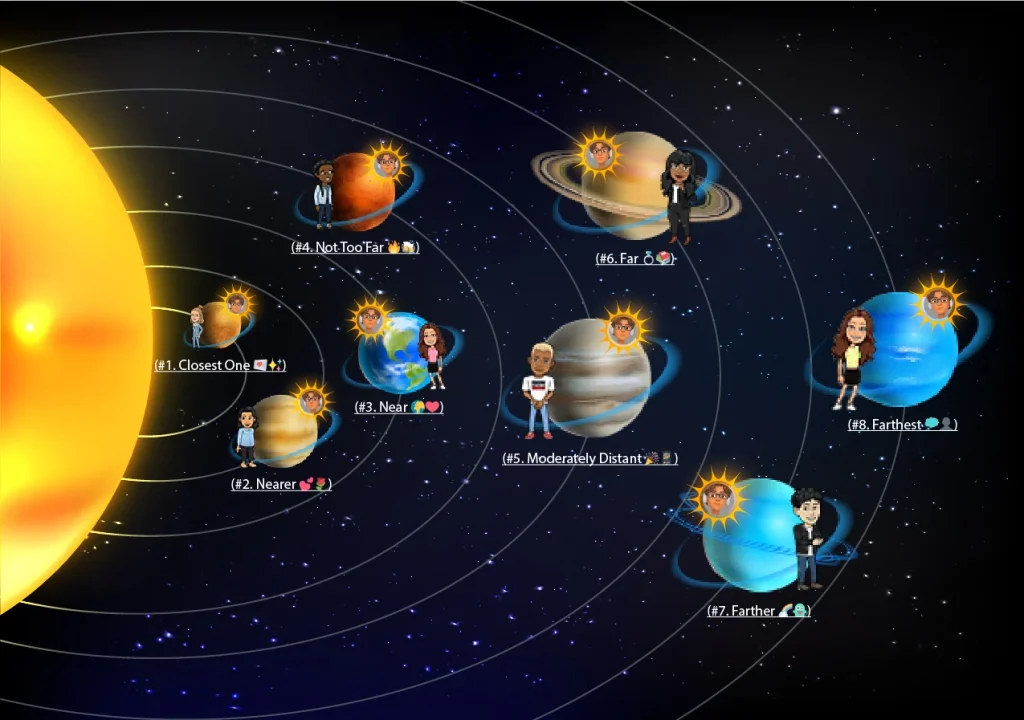
How the Snapchat planet order works:
This Snap solar system follows the real planetary order:
Important things to know:
A few common reasons:
Here’s every planet in the Snapchat snap planet ranking, with its technical meaning and what it signals in dating culture:
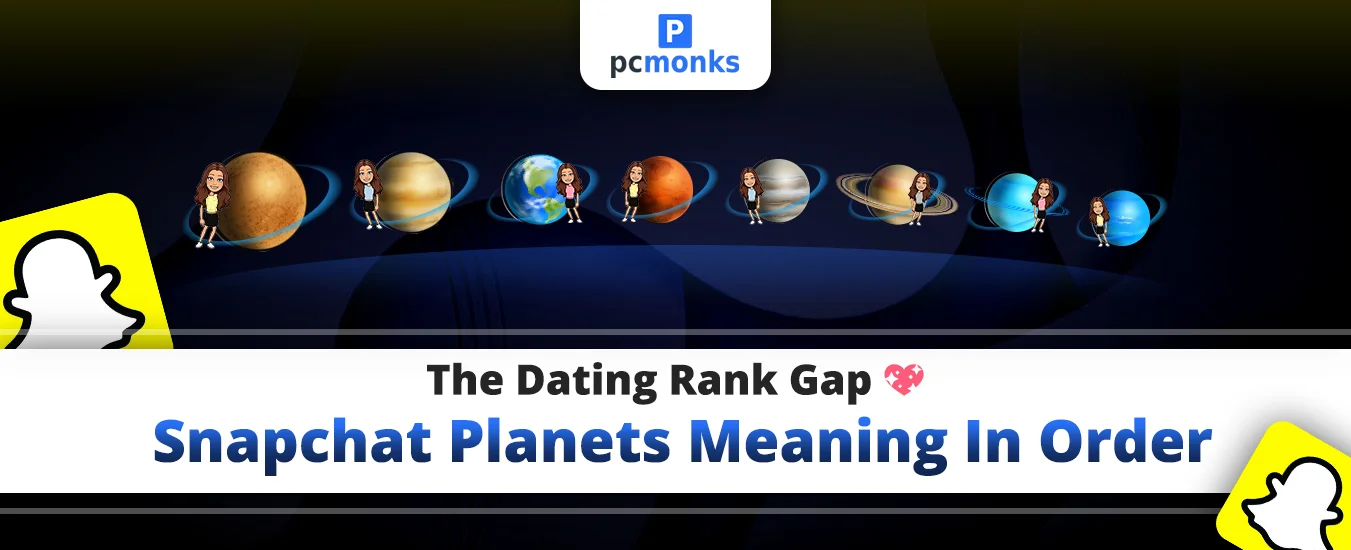
| Planet | Snapchat Rank | Dating/Friendship Tier (Gen Z) |
| Mercury | #1 Best Friend — highest snap and chat frequency | “Main character” energy. Your current top person. High jealousy risk if rankings shift. |
| Venus | #2 Closest friend | Early-stage crush. Talking a lot, but not yet exclusive. |
| Earth | #3 — Strong, consistent bond | Bestie or potential friends-to-lovers zone. |
| Mars | #4 — Active but less frequent chat | Party friend. Late-night snaps but nothing serious. |
| Jupiter | #5 — Daily but casual conversation | “Roster” member. Consistent but not a priority. |
| Saturn | #6 — Mutual but low chat | Coworker, classmate, or safe backup. |
| Uranus | #7 — Occasional bestie | Soft ghosting / situationship leftovers. |
| Neptune | #8 — Low engagement | “Background character” — the new low-key insult in dating chats. |
Every planet reveals something real about the relationship dynamic. Here’s what each one signals:
Key patterns to watch:
Being someone’s Neptune isn’t automatically a disaster — but it does mean something worth paying attention to.
When the Snapchat solar system becomes a red flag:
None of these alone is proof of anything. But combined with a Neptune ranking? Worth a direct conversation.
Uranus — the 7th position — is the soft ghosting grey zone. You’re still in their top 8, which means you matter. But here’s the catch:
If you notice you’ve been Uranus for weeks without movement, it may be time to either increase contact or accept where you stand.
If your current planet position bothers you, the fix is straightforward — Snapchat’s algorithm rewards consistent, mutual interaction:
Remember: Snapchat measures frequency and consistency, not the depth of your feelings. You can care deeply about someone and still end up as their Neptune if the snap history doesn’t back it up.
| Aspect | Inner Circle (Mercury to Mars) | Outer Circle (Jupiter to Neptune) |
| Snapchat meaning | High-frequency streaks, snaps, chats, and story views | Occasional snaps, minimal or passive engagement |
| Dating status | Closest partner or top priority | Casual fling, situationship, or emotional backup |
| Emotional investment | Constant communication, high trust, emotional exclusivity | Emotional distance, low trust, or slow fade |
| Behavioral signals | Quick replies, active streaks, appearing at the top of their Snapchat story viewer order | Ghosting tendencies, irregular replies, passive views |
| Emotional value | Valued, trusted, emotionally invested | Backup option — present but not primary |
| Digital insult level | Mercury = closest confidant, the position everyone wants | Neptune = cold orbit — the modern dating insult |
| Cultural impact | Associated with active dating or strong friendship | Associated with emotional distance and rejection |
Social pressure from these rankings can trigger jealousy, insecurity, and toxic comparison — especially in younger dating culture where Snap activity is treated as emotional evidence.
At least one user needs Snapchat+ for the Friend Solar System to appear. If your friend has Snapchat+ and you don’t, you may still see a planet badge on their profile — but the feature works most reliably when both users have the subscription. Make sure both of you have enabled the Friend Solar System option in settings, and that you’re in each other’s top 8 Best Friends — otherwise, the gold badge won’t show up at all.
No — and this is by design. Snapchat’s Friend Solar System is completely private. You can only see your own position on someone else’s profile. You cannot view who else is in their orbit or where other people rank. This keeps the feature personal and prevents mass comparison — though it doesn’t stop people from connecting the dots.
In dating culture, yes — Neptune signals you’re their 8th closest friend, which can feel like a low priority. But remember: Snapchat tracks interactions, not feelings. A low rank might just mean your snap habits don’t match up, not that the person doesn’t care about you.
It means you’re investing more in the connection than they are. You’re their #1, but they’re only your #6. That’s a one-sided dynamic worth paying attention to — especially in early dating stages.
Your interaction frequency dropped — fewer snaps, chats, or story replies. Snapchat’s solar system updates based on recent activity, so any period of low engagement will shift your rank outward.
Indirectly, yes. Signs to watch:
Note: Other people’s friend lists stay private. You can only see your own position.
Not necessarily. Being Neptune means you’re still in their top 8 — just at the lowest position. It means contact exists but is infrequent. If you’re Neptune across everyone’s list, it might just mean you’re not a heavy Snapchat user overall.
Both sit in the outer circle, but Neptune is worse — it’s the farthest position possible. Uranus (#7) at least means 6 others interact with them more than you; Neptune (#8) means all 7 others do.
Yes — the ranking refreshes based on your recent activity. According to Reddit users in the Snapchat community, changes can show up daily, though it doesn’t update in real-time. A few days of increased engagement can visibly shift your planet.
Because it perfectly describes a situationship: you’re on the list (you exist to them), but you have the lowest priority. You’re maintaining just enough contact to stay in orbit — but not enough to matter in the inner circle. It’s the Snapchat equivalent of being left on read forever.
Ideally Mercury or Venus — meaning they’re your first or second most-engaged contact. That’s where a genuine crush relationship tends to show up in the algorithm.
You’re in their top 8 but at position 7. You’re not a stranger to them, but you’re also not a priority. Six other people interact with them more consistently than you do.
Also Read: How to Save Snapchat Memories to Google Photos for Free (Bypass 5GB Limit 2026)
If you’re someone’s Neptune, Snapchat is telling you something quietly: you’re in their world, but not at the center of it. That’s the digital insult Gen Z is talking about — not being blocked or deleted, just being… orbiting at a distance.
The good news? Planet rankings aren’t permanent. They shift with your habits. Send more snaps, stay consistent, and keep the conversation genuinely two-way — and the algorithm will move you closer to the Sun.
But if you’ve been Neptune for weeks despite trying? Sometimes the clearest signal isn’t on the app. It’s the conversation you haven’t had yet.
So go have it.