Physical Address
304 North Cardinal St.
Dorchester Center, MA 02124
Physical Address
304 North Cardinal St.
Dorchester Center, MA 02124
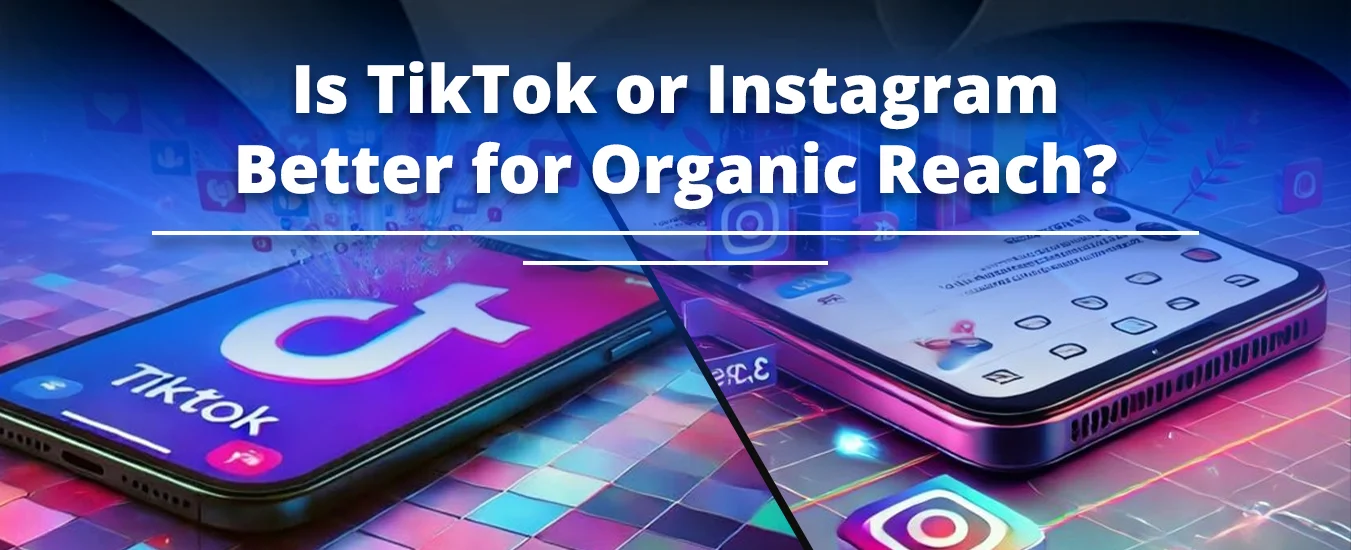
When it comes to better and wider audience reach, you are confused between two social media apps—TikTok and Instagram. Both work amazingly well as free platforms for creating an account and socializing to reach the maximum number of people. But which one is better? If you are thinking this, this guide will help you choose between the two. Keep reading the post!
Each app has its own recommendation and discovery surfaces: TikTok’s For You feed works differently from Instagram’s Reels, Explore, Feed, Stories, and Search. Many people on Reddit mention that TikTok is better for organic reach because it features creators’ content to a random audience, while Instagram is audience-specific.
Before going deeper, here’s a short answer for which social media app is better and why:
| Goal | More suitable starting point |
|---|---|
| Reach new viewers through short-form video | TikTok |
| Combine discovery with Stories, DMs, and a wider profile | |
| Build search-focused tutorials | Test both |
| Reach local customers | Test both and measure local actions |
| Save production time | Prioritize the platform producing better results per content piece |
Organic reach is the number of people who see your content without you paying to promote it. It’s the opposite of paid reach, which comes from running ads.
Organic reach depends on recommendation systems, search, and shares. Paid reach depends on your ad budget and targeting. A piece of content can perform well organically and still be boosted with paid spend afterward — the two aren’t mutually exclusive.
Since we are talking about organic reach, understanding the key metrics regarding this is necessary:
Comparing “TikTok views” to “Instagram reach” isn’t an apples-to-apples comparison. Keep metric definitions consistent when you compare platforms.
“Better reach” means different things depending on what you’re trying to achieve. It could mean:
Before comparing platforms, define which of these matters most to you. A platform that wins on views might lose on leads, and vice versa.
TikTok has publicly explained that its ‘For You’ feed is powered by a recommendation system that delivers content likely to interest each specific user, and that no two people see exactly the same feed. The system is built from ongoing behavior, not a fixed set of rules.
TikTok’s recommendation system weighs how you interact with content and creators — the videos you like, share, comment on, watch to completion, or mark as “not interested,” along with the accounts you follow or hide.
This includes details like captions, sounds, hashtags, and on-screen text, which help TikTok understand what a video is about and who might enjoy it.
TikTok also factors in device and account settings, such as language preference and general location, though the platform notes these carry less weight than user interaction and video information signals.
How long people watch — and whether they rewatch — is one of the strongest signals TikTok uses to judge whether a video deserves wider distribution.
Not every video posted is automatically eligible for recommendation. Videos that violate community guidelines, use certain restricted sounds, or are flagged as low-quality/spam can have limited distribution regardless of how good their other signals are.
Instagram head Adam Mosseri has been direct about a common misconception: Instagram doesn’t run one single algorithm. Each part of the app (Feed, Stories, Explore, Reels, Search, and more) uses its own ranking system tailored to how people actually use that surface. Understand the recommendation system here:
Reels are ranked primarily on predicted entertainment value. Mosseri has said Reels ranking looks at your activity, along with how likely you are to find a specific Reel engaging. Distribution here leans more toward non-followers than the main Feed does, which is why Reels are often the entry point for organic discovery on Instagram.
Instagram’s Explore page factors in a post’s overall popularity, how you’ve interacted with similar posts before, and whether you’ve engaged with that creator previously. It’s built for discovery of new accounts, similar in spirit to TikTok’s For You Page, but weighted differently.
The main Feed draws from your activity, information about the post itself, information about the person who posted it, and your history of interacting with that account — meaning it leans more heavily toward accounts and people you already follow, compared to Explore or Reels.
Stories ranking looks at how often you engage with a specific account’s Stories and your overall closeness with that person, so Stories distribution is concentrated almost entirely among existing followers rather than new audiences.
Instagram Search increasingly behaves like a mini search engine, surfacing Reels and posts based on keywords in captions, on-screen text, and audio transcriptions — not just hashtags.
Instagram has said it deprioritizes recycled or watermarked content (for example, reposted TikToks that still carry the TikTok watermark) in Reels recommendations. It only favors original content produced for Instagram.
Both are short-form vertical video, but they live inside different recommendation ecosystems with different audience expectations, editing conventions, and pacing preferences.
Let’s decode how organic reach attainment is different for features both platforms use for the purpose:
Both platforms can show content to non-followers, but the proportion varies by account and content type. Recent Reels benchmarks show reach can average roughly a third of an account’s follower count per Reel, with top-performing content reaching well beyond that — figures that shift constantly, so check current data rather than relying on a fixed number.
TikTok users often browse in longer, more continuous sessions built around discovery. Instagram users frequently move between Reels, Stories, and Feed within the same session, which can affect how much attention any single format gets.
Platform culture shapes expectations. TikTok audiences are generally more accustomed to raw, fast-paced, trend-driven content. Instagram audiences, shaped by years of curated Feed posts, often respond well to slightly more polished visuals — though this gap has narrowed as Reels has matured.
If a piece of content is central to your strategy, it’s often worth adapting the hook, pacing, captions, and cover image for each platform rather than posting an identical file to both. (The detailed process for this is covered later, in the repurposing section).
TikTok’s For You Page is built around discovery by design, which is why TikTok can be stronger for reaching people who have never heard of your account.
Because TikTok’s system doesn’t require an existing following to distribute content widely, small and brand-new accounts often see faster initial reach spikes on TikTok than on other platforms — though this isn’t guaranteed for every account.
Niche and specific content can still find an audience on TikTok, because the recommendation system is built to match narrow interests with the right small audience segments, not just push broadly popular content.
TikTok’s culture of sounds, challenges, and trends can provide an opportunity for rapid reach spikes that are less common on Instagram, though trend-based reach tends to be short-lived and less predictable than search- or niche-based reach.
Reach alone doesn’t guarantee followers. Converting TikTok viewers into followers typically depends on a clear, consistent content identity and a reason for viewers to want to see more from you specifically, not just one viral clip.
Instagram’s Feed and Stories are built to keep existing followers engaged, which is why Instagram often suits accounts focused on deepening a relationship with an audience they already have.
Instagram gives you multiple surfaces working together — Reels for discovery, Feed for curation, Stories for daily connection, and DMs for direct conversation. Which is why it is easy to build a layered relationship with your audience over time.
Comments, DMs, and Close Friends Stories give Instagram a set of built-in tools for two-way interaction that may suit creators and brands prioritizing community over raw reach.
Because Feed and Stories lean toward existing followers, Instagram can often produce a higher rate of returning viewers per post compared to a platform built primarily around new-viewer discovery.
Instagram’s link stickers, shopping tags, and DM automation tools often suit accounts trying to convert an existing audience into website visits, leads, or sales.
Both platforms can show content from zero-follower accounts to non-followers, but TikTok’s discovery-first design often produces reach faster in the earliest days of an account.
Posting the same core idea in slightly different formats on both platforms can help you learn, with real data, which platform’s audience responds better to your specific niche.
Consistency matters more than platform choice in the first few weeks. Accounts that post regularly and study what resonates tend to outperform accounts that post sporadically, regardless of which app they’re on.
Track non-follower reach and retention rate, not just raw view count, in your first 20–30 posts. These two metrics tell you whether your content is actually working with the algorithm, or just getting a follower-base bump.
If you have the capacity, testing both platforms for at least 4–6 weeks with a consistent posting cadence gives you enough data to make a decision based on your own numbers instead of general claims.
| Content type | Platform that may fit better | Why |
| Short-form entertainment | TikTok | Discovery-first feed rewards fast hooks and trend formats |
| Educational content | Test both | Strong on TikTok’s FYP and Instagram Search alike |
| Tutorials and how-to videos | Test both | Benefits from search intent on both platforms |
| Product demonstrations | Shopping tags and Feed/Stories support conversion | |
| Personal branding | Multiple surfaces support an ongoing relationship | |
| Local content | Test both, measure local actions | Discovery varies by market and language |
| Lifestyle content | Matches curated Feed/Stories culture | |
| Trend-based content | TikTok | Sound and challenge culture is more central |
| Search-focused content | Test both | Both platforms have expanded in-app search |
Note: This is just a directional guide, not an absolute rule. Your content quality and consistent approach still matter.
Both platforms can build brand awareness, but TikTok’s discovery-first design can provide an opportunity for faster initial exposure to people outside your existing customer base.
Instagram’s shopping tags, product tags, and Explore page integration often suit businesses trying to connect discovery directly to a purchase path.
Comment culture differs: TikTok tends to generate higher raw comment volume, while Instagram’s DMs and Stories replies often produce more direct, one-to-one interaction.
Instagram’s DM-based tools (quick replies, automated FAQs) often suit lead generation better than TikTok’s comment-heavy interaction style, though TikTok is also expanding business messaging tools.
Both platforms support link stickers and bio links. Instagram’s Story link stickers and TikTok’s bio and video links both work, but conversion rates depend heavily on audience intent, not just the platform.
Visible follower counts, comments, and shares serve as informal social proof on both platforms — useful for brand credibility, though it shouldn’t be the only metric you track.
Local hashtags, location tags, and geo-targeted content can perform on both platforms, but results vary a lot by city size, language, and how actively local audiences use each app.
Track your goal-relevant metric (leads, sales, bookings, website visits) rather than vanity metrics like views, when evaluating a platform for business use.
TikTok’s discovery-first design can provide more opportunities to be found by people who’ve never seen your content, which is often valuable in the early stages of building a following.
Instagram’s multi-surface structure (Feed, Stories, Reels, Notes) often suits creators building a more rounded, ongoing personal brand rather than a single-format identity.
Comments, DMs, Close Friends, and Broadcast Channels give Instagram creators several tools for building community depth, alongside TikTok’s own comment and Live features.
Many creators post to both platforms and adapt formatting rather than choosing one exclusively — this is often more sustainable than committing entirely to a single app.
Brands evaluate creators on both platforms differently: TikTok deals often emphasize reach and trend relevance, while Instagram deals often emphasize engagement quality and audience demographics.
Track follower growth rate, non-follower reach, and engagement rate together, rather than any single metric in isolation, to get an accurate read on genuine audience growth.
These factors have been explained in detail in earlier sections — this is a concise summary.
Posting when your specific audience is active can help content get early engagement, which can influence how widely it’s tested for further distribution.
Your existing followers’ habits (time zone, daily routine) affect when they’re most likely to see and engage with new posts first.
Some evidence suggests early engagement in the first hour or two after posting can influence how far a recommendation system pushes content — though this varies by platform and isn’t a guaranteed mechanic.
Generic “best time to post” charts are averaged across huge, mixed audiences. Your specific audience’s habits, time zone, and platform usage patterns are what actually matter.
Check your account’s own analytics (available natively on both TikTok and Instagram) to see when your specific followers are most active, and test posting at different times over several weeks.
Consistent posting — even at a moderate pace — tends to support steadier organic reach than sporadic bursts of activity followed by long gaps.
Many active TikTok accounts post multiple times per week; some post daily. There’s no fixed requirement, but consistency and quality both matter more than raw volume.
Instagram accounts often post Reels a few times a week alongside occasional Feed posts and daily Stories, though this varies widely by niche and available resources.
Posting more often with lower quality can reduce your average performance and, over time, your recommendation eligibility. A sustainable, quality-first cadence is generally worth prioritizing over volume alone.
Start with a frequency you can maintain consistently for at least 8–12 weeks, then adjust based on what your analytics show about performance at that cadence.
Build content around a specific viewer, not a generic audience — specificity tends to produce stronger retention and interaction signals.
The first 1–3 seconds heavily influence whether viewers keep watching, which directly affects retention-based ranking signals.
Structure content to sustain attention throughout, not just at the start — pacing, pattern interrupts, and clear structure all help.
Write captions and on-screen text using the language your target viewer would actually search for or relate to.
Use trending sounds or formats only when they genuinely fit your content and audience — forced trend participation rarely performs as well as trends that fit naturally.
Experiment with different lengths, structures, and styles, and track which formats produce the strongest retention and non-follower reach for your specific account.
Review TikTok’s native analytics regularly (audience retention graphs, traffic source, average watch time) to understand what’s actually working, rather than relying on assumptions.
Prioritize content made specifically for Instagram over reposted files, especially for Reels, where originality is a known ranking factor.
Apply the same hook and pacing principles used on TikTok — the first few seconds and overall watch-through rate matter heavily for Reels distribution too.
Write captions with natural, descriptive language that matches how people search on Instagram, not just hashtags.
Prompt comments, saves, and shares through clear calls-to-action — these signals often carry more weight in Reels ranking than passive views alone.
Combine Reels for discovery, Feed for curation, and Stories for daily connection, rather than relying on a single surface.
Try Reels, carousels, and single-image posts to see which formats your specific audience responds to most.
Use Instagram’s native Insights (reach, non-follower percentage, retention) to guide ongoing content decisions.
Post comparable content (same topic, similar production quality) to both platforms so you’re comparing content performance, not content quality differences.
Run your test over the same length of time on both platforms — a few weeks minimum — to account for normal week-to-week fluctuation.
If possible, compare performance among similar audience segments (same country, similar age range) rather than your entire follower base on each platform.
This tells you how well each platform’s recommendation system is distributing your content beyond your existing base.
Compare average watch time and completion rate, since these numbers heavily influence future distribution on both platforms.
Compare likes, comments, shares, and saves relative to reach, not just in raw numbers.
These indicate how well reach is converting into audience growth, not just passive viewing.
Ultimately, compare the platforms against the specific goal you defined earlier (reach, community, leads, sales) rather than a generic “which performed better” question.
| Metric | What it tells you |
| Reach | Unique accounts that saw your content |
| Non-follower reach | How well the algorithm is distributing to new people |
| Views | Total plays, including repeats |
| Watch time | Total time spent watching |
| Retention | Percentage of the video watched on average |
| Engagement | Likes, comments, shares, saves relative to reach |
| Profile visits | Interest generated beyond the post itself |
| Follower growth | Whether reach is converting into audience |
| Website clicks | Traffic generated from the post |
| Leads and sales | Business outcomes tied to the content |
The most useful metric depends on your goal — a viral video with low website clicks may not matter for a lead-generation business, and a low-view tutorial with high saves and shares may be quietly outperforming for a search-focused strategy.
Neither platform is universally better. TikTok’s discovery-first design can be stronger for reaching new, non-follower audiences, while Instagram’s multiple surfaces often suit deepening relationships with an existing audience. The right platform depends on your content, audience, and goal.
TikTok’s For You Page is built around discovery, which can make it stronger for reaching people outside your existing following — though results still depend heavily on content quality and niche.
Instagram’s combination of Feed, Stories, DMs, and Close Friends often suits ongoing community-building better than TikTok’s more discovery-focused structure, though TikTok also supports comments and Live interaction.
Yes. TikTok’s recommendation system can distribute content from new accounts to non-followers based on content signals, not follower count.
Yes, primarily through Reels and Explore, which are designed to surface content to non-followers based on predicted engagement rather than existing follower count.
It can, especially for discovery-focused, trend-based content — but Instagram Reels are also built for non-follower distribution. Actual results vary by account, niche, and content quality, so test both before deciding.
Reels can achieve strong non-follower reach, particularly for original, well-retained content, though average engagement rates on Reels and TikTok differ, based on current industry benchmarks. TikTok’s average engagement rate has generally outpaced Instagram Reels in recent industry data, even as TikTok’s own rate has declined year over year.
You can, but adapting the video (removing watermarks, adjusting the hook and captions) tends to perform better than posting an identical, unedited file to both platforms.
Hashtags help with topic categorization but carry less weight than natural, descriptive keywords in captions and on-screen text on both platforms today.
It can influence early engagement, which may affect distribution — but there’s no universal best time. Your own audience’s activity patterns matter more than generic recommendations.
This varies widely by niche, consistency, and content quality. Many creators and businesses need several weeks to months of consistent testing before drawing conclusions.
It depends on the business goal. Businesses focused on broad brand awareness may lean toward TikTok’s discovery strengths, while businesses focused on product discovery, DMs, and conversions may lean toward Instagram’s shopping and messaging tools. Testing both against your specific goal is the most reliable approach.
Yes. Because the system does not require an established following to distribute content, a brand-new account can be tested in front of a small, diverse batch of viewers. If early retention and interaction are strong, the video can be shown to progressively larger groups — this is often called the initial “test phase.”
Yes, primarily through Reels and Explore. Instagram has specifically adjusted Reels ranking over time to give smaller, newer creators a chance to reach non-followers through what it calls “trial Reels” — test posts shown to a slice of non-followers before wider distribution.
Three things are worth remembering:
Test both platforms with real content, track the metrics that match your goal, and let your results guide where you invest your time.